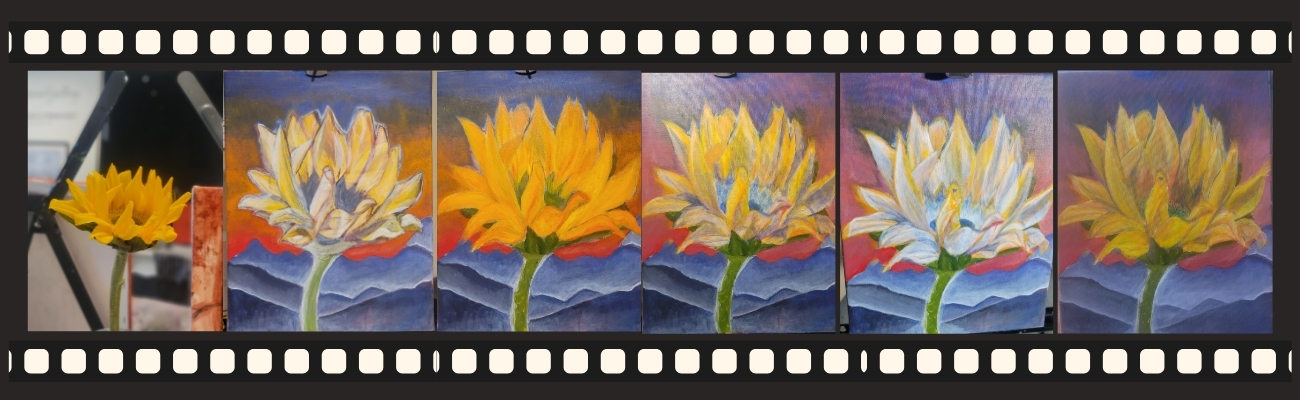
A sunflower sunset
The process of painting a sunflower sunset. Painting with the light workshop with Amanda sage.
The start
This was the second time I was attending a workshop with Amanda Sage, an amazing artist I have met through my partner. The one thing I learnt from the first workshop was to not overthink it and to trust the process. I was then decided to not overthink drawing this flower. My favorite color (right now, and for the past 10 years or so) is yellow, so I picked a yellow flower as a reference. I started with a rough sketch of the flower, trying not to obsess over getting it perfectly. This was not only a workshop to practice painting to me, it also is a workshop to practice being kind and forgiving to myself. I then started with the light and the dark process, which is the core of this technique; alternating light and dark layers until…it works. Then came in the colors.
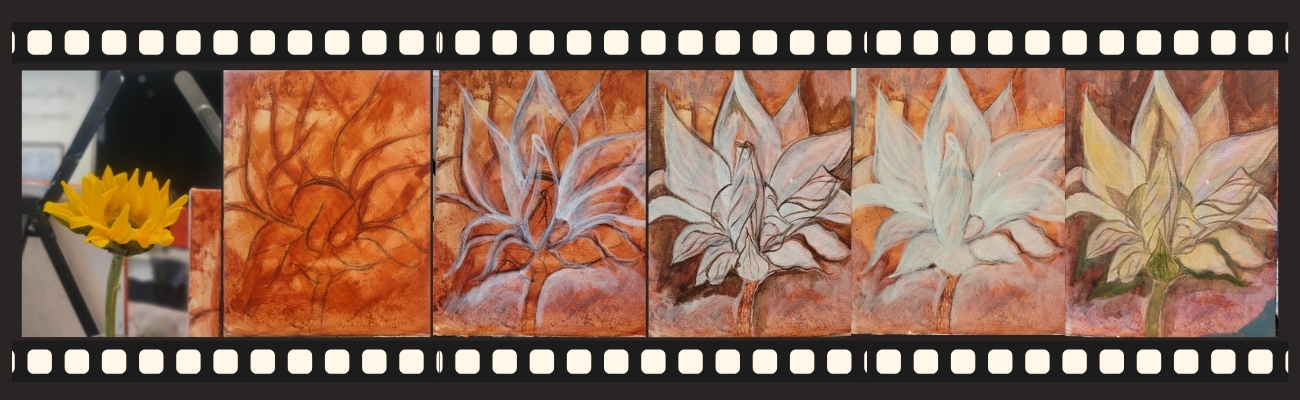
Next stage
I added more and more colors, however as I was looking at my reference I realized what I am drawing is definitely not this flower. It is inspired by it but it s not the flower. I liked my drawing, that said, since I did not know what I was drawing, it was hard to keep going. The one thing I knew was … this piece is not yet finished. So I started the “surgery” phase, which was the hardest part: looking into my own perspective, wondering what was I drawing, what was I capturing, and why am I not capturing this flower. Although (I think) my eyes have been staring at my reference, my hand was doing something else. Then I realized, I am not drawing my flower, because I do not know how to draw this flower. I can see it, but I did not understand how to do a drawing that looked like it. So, as you see in the second picture below I started drawing with chalk to gauge the lines of my reference. Between drawing 2 and 3 were dozens of pencil drawings trying to capture my flower or at least learn whatever I did not know about it. Afterward, I started adjusting my drawing, and went back to my light and dark process + color. Then came the background.
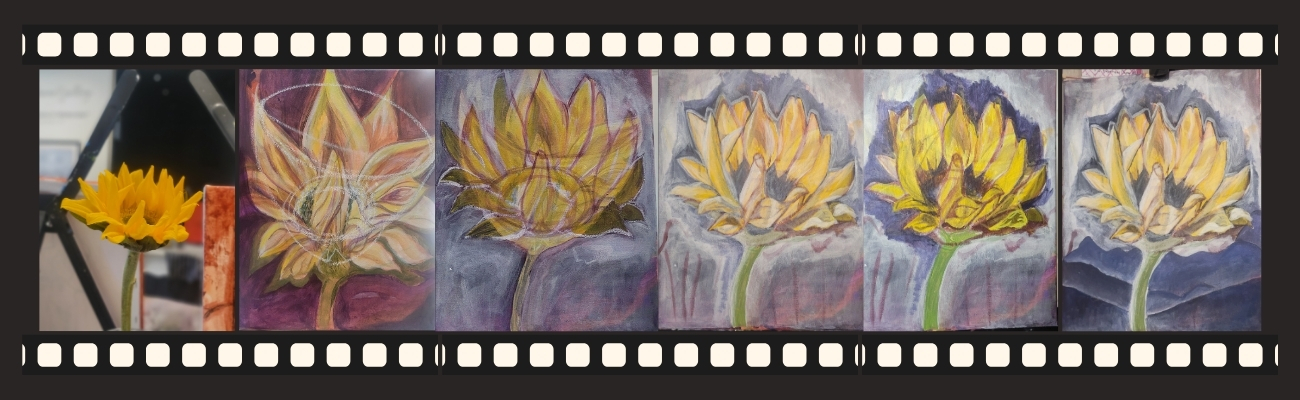
Iterative final stage
The next process went between, choosing colors for the background, reinforcing the colors of the flower, alternating lights and darks in the painting as a whole.